Skip to content
 Introduction
At the Southbound 2026 conference, HubSpot’s CEO delivered a wake-up call to the marketing world by revealing that 67 to 78 percent of Google searches are now zero-click. This data suggests that users are increasingly receiving answers directly on the results page or through AI synthesizers without ever visiting a website.
However, for growth-focused brands, this is not a signal to abandon SEO, but rather a mandate to evolve into Answer Engine Optimization (AEO) now to capture the high-intent leads that modern search now produces.
The risk of waiting is higher than you think.
Key Takeaways
- Traditional SEO is the foundation of authority, but AEO is the necessary execution layer for visibility in AI-driven search engines.
- Leads originating from Large Language Model (LLM) citations convert at a rate 1.66%, which is significantly higher than traditional search leads.
- Answer Engine Optimization requires a shift from optimizing for keyword rankings to optimizing for authoritative citations and summary synthesizers.
- Strategic content engineering, such as adding expert quotes and statistics, can boost visibility in generative engines by up to 30%.
- Success in 2026 is measured by Trust Volume and AI Share of Voice rather than simple click-through rates.
The Realities of the Modern Zero Click Search Landscape
The search landscape has shifted from a directory of links to a provider of instant answers. According to TheDigitalBloom’s 2025 Organic Traffic Crisis Report, AI Overviews now appear for over 13% of all queries, a number that doubled in the first half of 2025. This evolution means that being “on the first page” is no longer enough if an AI summary satisfies the user’s intent before they scroll. For mobile users, the impact is even more pronounced, with nearly 77% of searches ending without a click. While this might seem like a loss of opportunity, it actually represents a refinement of the buyer journey. Discovery is happening within the AI interface, and the brands that are cited as the primary sources gain immediate authority. DemandNow.AI helps businesses navigate this transition by treating zero-click results as a brand awareness win. Instead of fighting the decline in raw traffic, our strategy focuses on appearing as the definitive answer in these high-value summaries. This ensures your brand remains visible even when a user never clicks through to your site.
What is the Difference Between AEO and SEO?
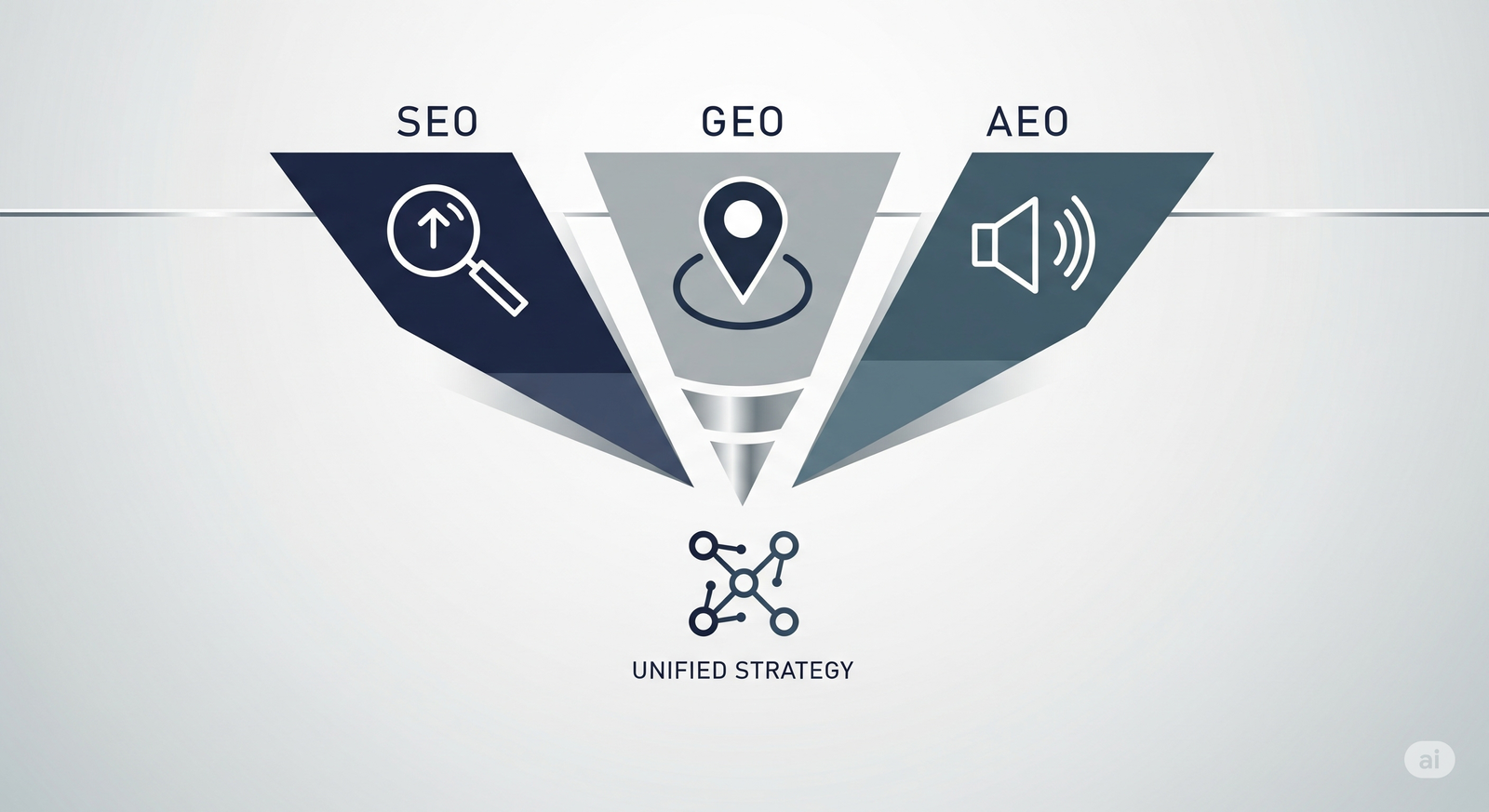
A common misconception among marketing leaders is that AEO is a replacement for traditional SEO. In reality, AEO is an extension that optimizes content specifically to be the answer that LLMs like ChatGPT, Perplexity, and Claude provide to users. SEO builds the library of information, while AEO ensures the librarian picks your book to answer the question.
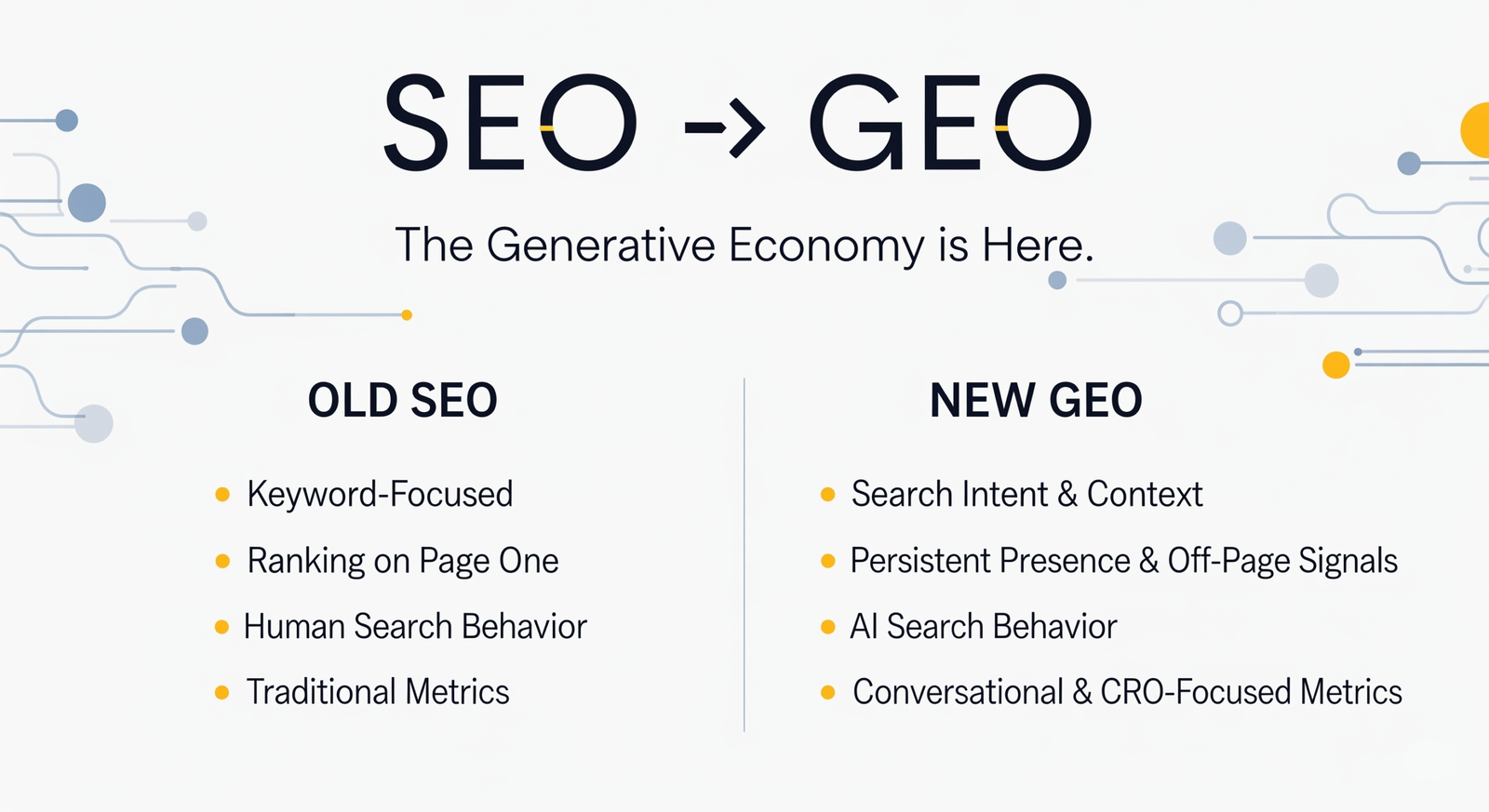
Traditional SEO focuses on “rankability,” while AEO focuses on “cite-ability.” You are no longer just optimizing for a search crawler; you are optimizing for a synthesizer that needs to verify and summarize information. This requires a shift in how content is structured, moving toward clear, direct, and authoritative information blocks.
The ROI of this shift is measurable and significant. Research from CapConvert highlights that LLM-sourced leads convert at 1.66%, compared to only 0.15% from traditional search engines. By layering AEO onto your existing SEO strategy, you target a lower volume of traffic that possesses much higher intent.
Core SEO Principles That Support AI Visibility
The fundamentals of SEO still matter because they inform the training data and citation logic of AI engines.. High-quality content is still the baseline; thin, AI-generated fluff is ignored by both Google’s algorithms and LLM synthesizers. If your content doesn’t provide unique value, it won’t be cited in a summary. E-E-A-T (Experience, Expertise, Authoritativeness, and Trustworthiness) has become more critical in the age of LLMs. These AI models prioritize sources that demonstrate verified expertise and maintain a strong reputation across the web. Backlinks and mentions from credible industry sources act as votes of confidence that AI engines use to determine which brands to recommend. Technical structure also remains a pillar of visibility. Using Schema.org markup and maintaining a clean site architecture provides a map that AI engines use to ingest and understand your data. DemandNow.AI’s SEO service page details how we use these technical foundations to build the authority required for AI discovery.
New Content Engineering Tactics for Generative Engines
To win in Answer Engine Optimization, you must adopt Generative Engine Optimization (GEO) tactics. Research from Princeton and Georgia Tech indicates that specific content modifications can drastically increase your citation rate. Adding authoritative citations to your content can increase visibility in generative engines by up to 30%. Another high-impact tactic is “Statistic Addition.” Including relevant data points and statistics within your text increases the likelihood of being cited by 15%. AI synthesizers love structured data because it is easy to parse and present as a definitive fact to the user. This is why you need a data strategy and an ability to generate insights from your business that feed your content engine. How’s your data and are you using it for content and insights? Expert quotations are equally powerful, providing a 25% boost in citation frequency. DemandNow.AI’s AEO service page outlines how we integrate these “GEO boosters” into every piece of content we produce. By engineering your content to be “parseable” for AI, you move from being a hidden link to a featured authority.
Why LLM Sourced Leads Are Your New Growth Engine
The shift toward AEO is actually a shift toward quality. Users interacting with LLMs for research are typically deeper in the funnel, mid-funnel (consideration), or lower funnel (transaction) and looking for specific solutions or comparisons. When an AI cites your brand as the answer to a complex business problem, the trust is already established before the lead even arrives on your site. This “Trust Volume” is more valuable than traditional traffic volume. Instead of filtering through thousands of low-intent clicks, your sales team interacts with prospects who have been “pre-sold” by the AI’s recommendation. This explains why the conversion rate for these leads is over ten times higher than traditional search traffic. DemandNow.AI specializes in building these conversion-optimized engines. We don’t just create content to rank; we create content to be the definitive source of truth in your industry. Our methodology ensures that your brand owns the “AI Share of Voice” in your specific market niche.
Strategic Content Structuring for Maximum Synthesis
To be cited by an AI, your content must be easy to synthesize. This means moving away from long, rambling introductions and toward direct, modular information. The “StoryBrand” approach used by companies like Airbnb.org serves as an excellent example of clear, direct messaging that eliminates confusion. Each section of your content should serve as a standalone answer to a potential query. Using H2 and H3 headings phrased as questions helps AI engines identify the specific problems your content solves. Bulleted lists and data tables are also essential, as they provide high-density information in a format LLMs prefer. DemandNow.AI’s team of experts uses these structural frameworks to multiply the impact of your content. We audit your existing top-performing SEO pieces and re-engineer them for AEO readiness. This ensures that your current search equity is not lost, but rather amplified for the next generation of search.
Measuring Success in an Answer Engine Era
Traditional metrics like Keyword Position and Click-Through Rate (CTR) are becoming secondary. In 2026, the primary KPIs for growth leaders are AI Share of Voice and Citation Frequency. You need to know how often ChatGPT or Perplexity is mentioning your brand when users ask about your industry. Tracking unlinked brand mentions is also a vital new metric. Unlike traditional SEO, where the link is the primary value, LLMs learn from the sheer frequency and context of your brand name across the web. Being discussed as an authority in industry forums, news sites, and social media influences how AI synthesizers perceive your entity. DemandNow.AI provides custom KPI dashboards that track these evolving metrics. We help you see exactly where your brand stands in the AI search landscape and how that visibility translates into revenue. Our focus is on measurable growth, ensuring every piece of content contributes to your bottom line.
Strategic Comparison Between SEO and AEO Approaches
| Feature | DemandNow.AI AEO Strategy | Traditional SEO | Generic AI Content |
|---|---|---|---|
| Primary Goal | Citation in AI Summaries & LLM Mentions | Top 3 Ranking on Google SERP | Bulk content volume |
| Conversion Focus | 1.6%+ Lead Rate (High-Intent LLM Leads) | 0.15% Lead Rate (Traffic Volume) | Low (Vanity Metrics) |
| Content Engineering | Citations, Stats, & Expert Quotes (GEO-optimized) | Keyword density & Backlinks | AI-generated fluff |
| Success Metric | AI Share of Voice & Citations | Organic Traffic & Keyword Position | Total page count |
| Target Channel | Perplexity, ChatGPT, Claude, AI Overviews | Google Search, Bing | Social Media, Email |
| E-E-A-T Integration | Deep Authoritative Signals (First-party data) | Vague “Expertise” tags | None |
| Technical Layer | AI-Readable Schema & Modular Architecture | Site Speed & Mobile-Friendly | Minimal |
| Long-term Value | High (Future-proofs against AI shifts) | Medium (Traffic at risk of zero-click) | Low (Penalty risk) |
Implementation Framework for Future Proof Visibility
The window to get ahead of the AEO curve is currently open, but it is closing fast as more brands realize the power of AI citations. The best-positioned companies are those already doing SEO well; they simply need to extend their strategy. You don’t need to start over; you need to refine your execution for a synthesizer-led world. Start by auditing your high-traffic pages for “synthesis readiness.” Ensure your main points are clearly stated in the first few sentences and supported by verified data. Transitioning to this modular, data-rich format will protect your existing rankings while opening the door to AI-driven discovery.
DemandNow.AI acts as a marketing team extension, handling the technical and strategic heavy lifting of this transition. We provide the expertise needed to turn your content into a high-converting discovery engine. By aligning your strategy with how modern buyers actually search, you ensure your business remains visible and relevant, and you can capture traffic from LLMs and convert them into sales now.
Conclusion
SEO isn’t dead, it’s very alive, but the era of chasing clicks at the expense of authority is over. By evolving into Answer Engine Optimization, your brand can thrive in a zero-click world (AI overviews, LLM search) and capture leads that convert at ten times the traditional rate. The future of search belongs to the brands that provide the best answers, in an easy to consumer way for AI and humans, not just the most links.
Ready to see how your current content strategy stacks up in the age of AI? Book a DemandNow.AI growth audit today to secure your place in the next generation of search discovery.
FAQs
What is the difference between SEO and AEO? SEO focuses on ranking pages in search engine results to drive website clicks. AEO focuses on optimizing content to be the direct answer provided by AI engines like ChatGPT and Perplexity, often resulting in a citation even if the user doesn’t click. How does AEO improve lead quality? AEO targets users who are using LLMs for deep research and solution discovery. Because these users receive a direct recommendation or citation of your brand from the AI, they often arrive on your site with higher intent and trust, leading to 3x higher conversion rates. Can I use my existing SEO content for AEO? Yes, but it usually requires re-engineering. You must structure the content to be more modular, add authoritative citations, and include specific statistics to make it easier for AI synthesizers to extract and credit your brand as the source. Is GEO the same as AEO? GEO (Generative Engine Optimization) refers to the specific technical and content tactics used to increase visibility in generative AI. AEO is the broader strategic goal of becoming the preferred answer for any engine that provides direct responses to user queries.
Sources
- Yamini Rangan. “Keynote: The Future of Hybrid Growth.” HubSpot INBOUND 2025, September 2025, https://www.wsiworld.com/blog/hubspot-inbound-2025-keynote-the-future-of-hybrid-growth.
- Aggarwal et al. “GEO: Generative Engine Optimization.” arXiv / Cornell University, 2024, https://arxiv.org/html/2509.08919v1.
- The Digital Bloom. “2025 Organic Traffic Crisis: Zero-Click & AI Impact Analysis Report.” October 2025, https://thedigitalbloom.com/learn/2025-organic-traffic-crisis-analysis-report/.
- Jodene Murray. “SEO vs. AEO: What’s the difference and why it matters.” Optimizely, October 2025, https://www.optimizely.com/insights/blog/seo-vs-aeo/.
- CapConvert. “The Rise of Zero-Click Search.” March 1, 2026, https://www.capconvert.com/learn/blog/the-rise-of-zero-click-search.