Skip to content
 Your next customer probably won’t find you on Google. They’ll ask ChatGPT (or a similar AI search engine).
Even Google sees this shift coming. That’s why it’s rolling out AI Mode, leaning harder into Gemini, and making its search results more of an AI-first experience.
At DemandNow, we spend our days writing and optimizing content to get brands cited by AI search engines. Everything in this guide comes from that hands-on work.
This guide covers how to improve brand visibility across AI search engines like ChatGPT, Perplexity, Google’s AI Overviews, and Gemini.
Key Takeaways
- AI search visibility means getting mentioned or cited by tools like ChatGPT and Perplexity, not just ranking on Google.
- 88% of AI Mode citations don’t come from Google’s organic top 10, according to Moz, so ranking well on Google doesn’t guarantee AI visibility.
- Check your robots.txt for AI crawlers like GPTBot and PerplexityBot. If they’re blocked, none of your content gets seen.
- AI referral traffic is only 1.08% of website traffic today, but it converts at twice the rate of other channels.
- Put the direct answer in the first sentence of each section, since AI tools pull chunks, not full pages.
What Is AI Search Visibility, Anyway?
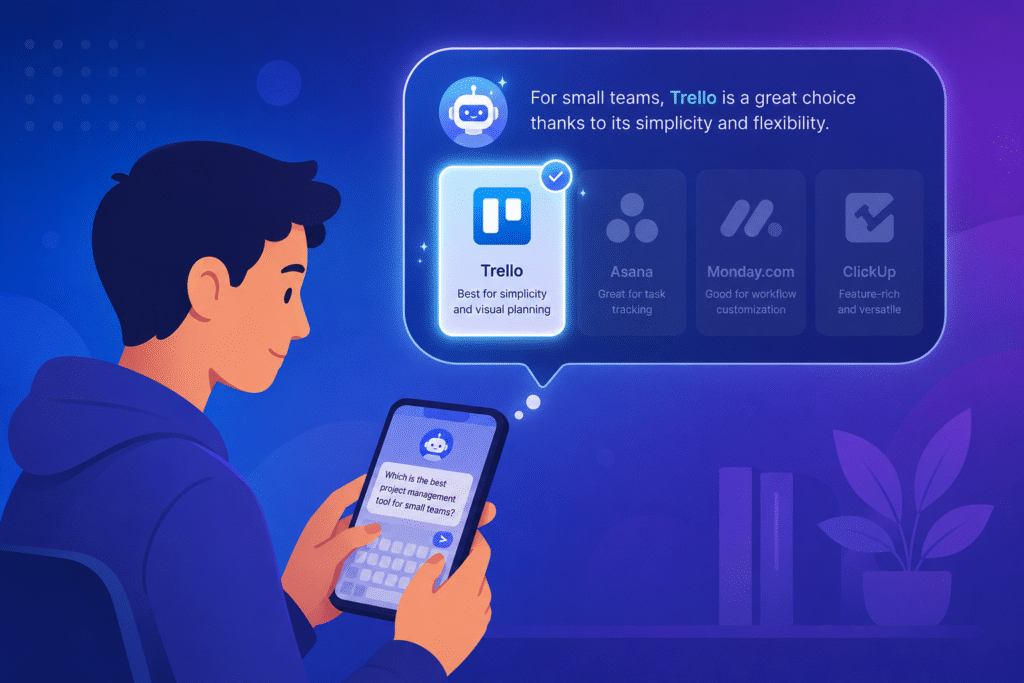
AI search visibility is whether AI tools like ChatGPT or Perplexity recognize your brand and actually mention it when someone asks a relevant question.
Let’s say someone types “best running shoes for flat feet” into ChatGPT. If your shoe brand shows up in that answer, you have AI search visibility. If it doesn’t, even if you rank #1 on Google for that same search, you’re invisible to that person.
Marketers call this by a few different names. GEO (Generative Engine Optimization), AEO (Answer Engine Optimization), AI SEO, and so on.
AI referral traffic only makes up 1.08% of all website traffic right now. But people who land on your site through an AI answer already got their question half answered before they clicked. They are validating something they already decided. One marketing exec tracking this found that visitors referred from LLMs convert at twice the rate of other traffic.
SEO vs. GEO: What’s the Difference?
SEO is about ranking your pages higher on Google. GEO (Generative Engine Optimization) is about getting your brand mentioned, cited, or recommended inside an AI-generated answer. They overlap, but they don’t reward the same things.
According to Search Engine Land, Google still pulls in 84.8 billion visits, more than any other platform. But a growing share of those searches never turn into a click. The person gets their answer straight from an AI Overview and moves on. So ranking high is no longer the finish line. Your brand needs to be inside the answer itself.
| Traditional SEO | Generative Engine Optimization (GEO) | |
|---|---|---|
| Goal | Rank on the results page | Get cited inside the AI answer |
| Unit of visibility | A blue link | A mention or recommendation |
| Success looks like | Clicks and sessions | Citations, mentions, accurate descriptions |
| What the user sees | A list of links to choose from | An answer to act on |
| Optimized for | Keywords and backlinks | Entities, clarity, and extractable answers |
How AI Search Engines Decide What to Cite or Recommend
Ranking #1 on Google does not mean ChatGPT or Perplexity will mention you. Moz analyzed close to 40,000 search queries and found that 88% of citations inside Google’s AI Mode were not in the organic top 10. Only 12% matched a URL that was already ranking on page one.
So if your SEO game is strong but your AI visibility is zero, this is why. These are two different systems, judging two different things.
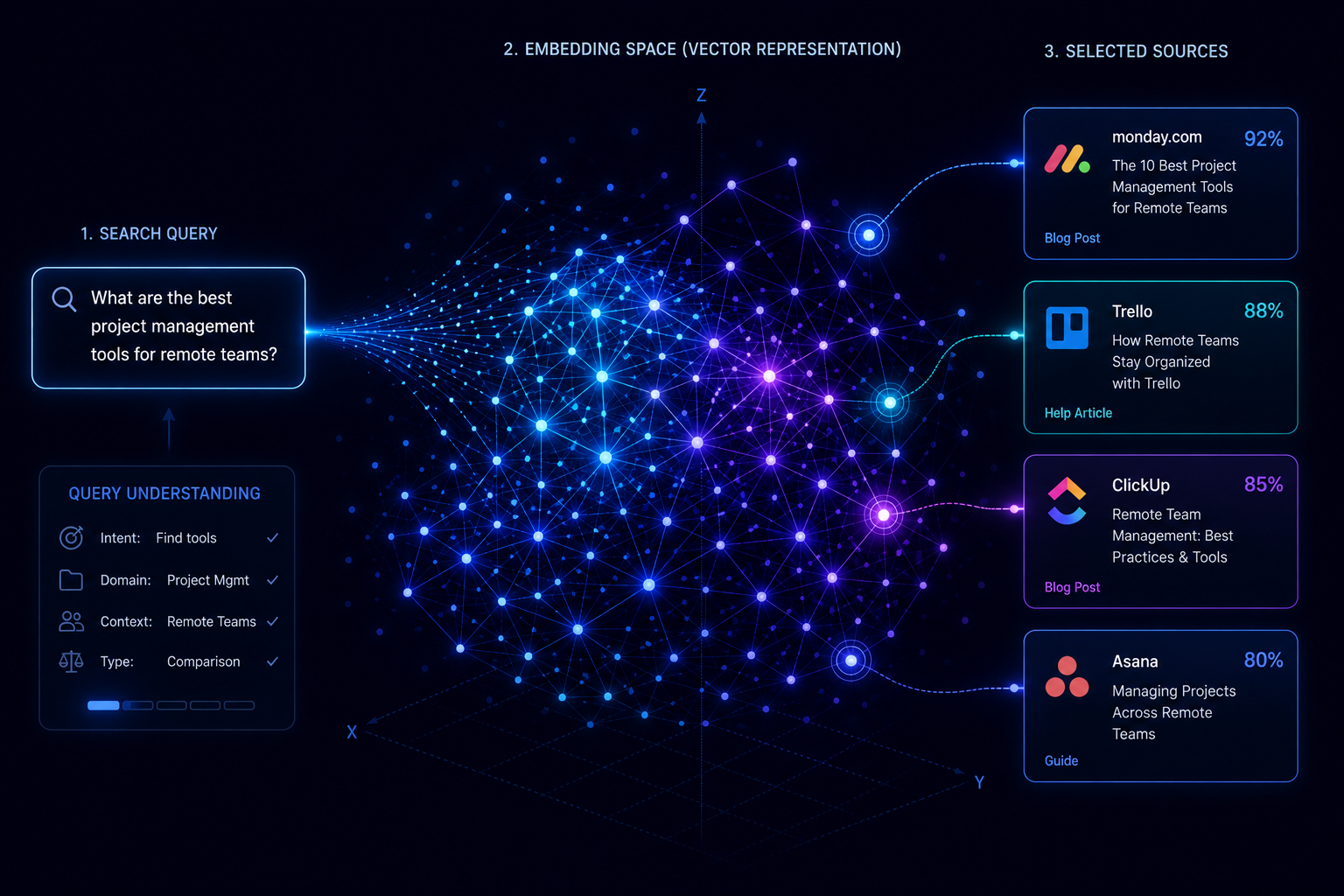
When someone asks a question to an AI search engine, it turns it into something called an embedding, basically a numerical fingerprint of what the question means. Then it searches its index for content that matches that meaning, narrows down the best candidates, and writes an answer using pieces of what it found. The sources it pulls from become the citations.
Most pages make it into the candidate pool but never into the final answer. Being retrieved and being cited are two different things.
So what determines which pages make the cut? Research keeps pointing to these factors:
1. Retrievability
Can the AI even get to your page? If your site blocks bots like GPTBot or OAI-SearchBot, or if your content only loads through JavaScript instead of plain HTML, the AI may never see it in the first place. No amount of good writing/content fixes a page the AI can’t access.
Cloudflare’s crawler analysis found that roughly 14% of the top 10,000 websites already publish robots.txt rules that block AI bots, often accidentally left over from rules written to block AI training crawlers, which look identical to the retrieval crawlers that now power AI search. If you blocked one, you may have blocked both.
2, Relevance
AI tools don’t grade your whole page. They break it into chunks and judge each chunk on its own. A 3,000-word article with the answer buried in paragraph nine can lose out to a short page that answers the question in the first few lines.
Saying things plainly also helps. A line like “pages with schema markup get 23% more AI citations” gets picked up far more than something hedgy like “this can be a factor in certain situations.”
Carnegie Mellon research on generative search engine citation found that factual claims attributed to credible sources with clear citations are among the strongest predictors of whether a passage gets used.
3. Authority
This is about whether your brand is trusted, and trust here means more than your own website. AI models check whether what you say about yourself matches what other people say about you. If a claim only shows up on your own site, it carries less weight than a claim backed up by outside sources, reviews, or mentions elsewhere.
Citation concentration is also real and stark. Research on news citation patterns across AI systems found that the top 20 sources captured 67.3% of all citations on ChatGPT, 31.9% on Google, and 28.5% on Perplexity. AI engines return again and again to the sources they already trust on a subject, which means authority compounds over time rather than resetting per query.
4. Structure
Clean formatting makes your content easier to pull from. Clear headings, bullet lists, tables, and schema markup all help the AI find and lift a specific passage. Specific numbers, dates, and named sources also help, since vague claims are harder to cite with confidence.
Overall length matters too. Short articles under 800 words average 3.2 citations, while long-form pieces over 2,900 words earn 5.1, according to a SE Ranking study.
Note: Headings should state the section’s conclusion, not tease it. A heading that says “What affects AI citations” is weaker than one that says “Five factors determine whether AI engines cite your page.” The first is a label. The second is an extractable answer on its own.
5. Freshness
Old content slowly loses its shot at getting cited, especially for anything time-sensitive like pricing or product details. Pages updated in the last few months tend to outperform pages that haven’t been touched in years.
Note: Bumping a published date without actually updating the content earns nothing. AI engines compare versions and can detect whether a refresh is substantive.
How to Improve Brand Visibility in AI Search Engines
For years, SEO agencies sold “topical authority” as publishing everything about a topic, covering every angle, hitting every keyword, until Google decided you were the expert. That worked perfectly, but It also filled the internet with thousands of nearly identical blog posts nobody asked for:
- What is a Running Shoe?
- History of Running Shoes
- Best Running Shoes for Marathons
- How to Choose Running Shoes
…and so on.
AI search exposed the flaw. Publishing more about a topic doesn’t make you an authority on it. Being talked about does.
Topical coverage is what you say about yourself. Authority is what the market says about you. Journalist mentions, forum discussions, customer reviews, people searching your brand by name, that’s what AI models actually read as authority, not page count.
An AI citation isn’t the same thing either. A model pulling your page into an answer is useful, but it’s closer to a system fetching data than a journalist choosing to feature you or a customer recommending you on Reddit. You want both, but the second builds a brand AI engines actually trust over time.
“AI hasn’t killed SEO. It’s killed the illusion that mediocrity deserves traffic.”
— Andrew Holland, Search Engine Land
Muck Rack’s analysis of millions of AI-cited links backs this up, as over 95% of them came from non-paid sources, and 89% came from earned media, not brand-owned blog content.
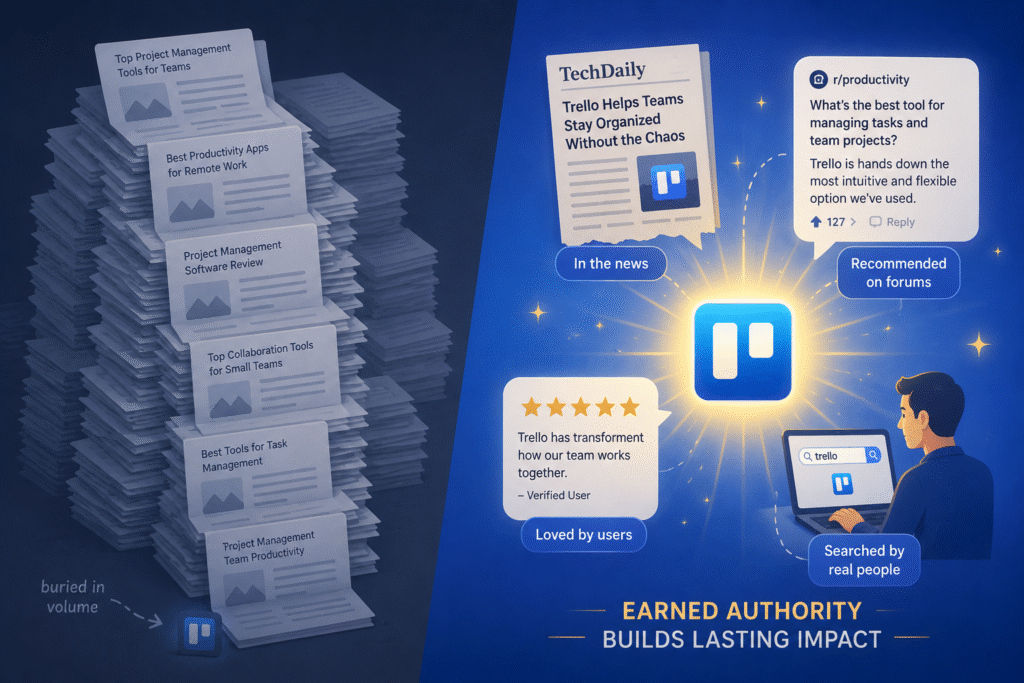
Tip #01: Show Up in Conversations You Don’t Control
Mentions earn citations. Here’s where to build them, platform by platform:
Ready to see how your current content strategy stacks up in the age of AI? Book a DemandNow.AI growth audit today to secure your place in the next generation of search discovery.
Reddit isn’t optional anymore. It commands a 40.1% share of all LLM citations, ahead of Wikipedia and YouTube combined.
However, the approach that works has nothing to do with marketing. One Redditor put it simply:
“the way i think about it is: don’t promote, create evidence.
if someone asks about a problem you’ve actually dealt with, answer it like you would in a private message. no links, no pitch, no “check my profile” stuff. over time people can tell what you know because your comments are specific.
the mistake is trying to turn every thread into a lead. i’d track this more like relationship and search visibility, not direct response. slower, but the traffic tends to be warmer when it works.”
Be a Redditor first, a marketer second. Reddit users spot anything fake or promotional almost instantly, and once they do, you’re done in that community.
Niche Forums and Communities
Beyond Reddit, every industry has its own forums, Slack groups, Discord servers, and niche communities where real people discuss real problems. These carry the same weight as Reddit for AI models, sometimes more, because they tend to be even more specific and less diluted by noise.
Find where your category’s actual buyers hang out. A SaaS founder forum, a landlord community, a B2B procurement group. Show up the same way you would on Reddit: answer questions honestly, skip the pitch, and let consistency build your reputation.
Writers’ Outreach
Journalists post requests for expert quotes and data on Qwoted, Featured.com, and other similar platforms. You can respond, and if they use your information, your brand lands in a publication AI engines already treat as credible.
Respond fast and keep it specific. A generic quote gets ignored, but a quote with a real number or a sharp opinion gets used.
Original Data and PR
If you have any internal numbers, even something small like average response time, churn rate, or a customer behavior pattern, package it into a short data point and pitch it to journalists or niche newsletters in your space.
Third-Party Reviews
A brand with a strong, current presence on the platforms buyers and models both check, Google Business Profile, Yelp, G2, and industry-specific directories, is far more likely to get surfaced as a credible answer.
AI weights recent reviews more heavily than old ones, so a burst of reviews from two years ago does little for you today. Ask satisfied customers to leave reviews on the platforms and keep that flow steady instead of doing it in occasional pushes.
Tip #02: Back Every Claim With Real Numbers
According to Citera’s analysis of 350,000 B2B SaaS articles, AI-cited articles averaged 4.2 statistics versus 1.2 for non-cited articles, and 64% of AI-cited articles had 3 or more statistics versus just 28% of non-cited ones.
This makes sense once you think about how AI tools actually pull information. They are looking for a clean, specific claim they can lift and attribute. “Conversion rates improved significantly” gives the model nothing to extract. “Conversion rates improved by 23% after adding live chat” gives it something concrete to cite.
You may pull stats from your own data, from studies, from surveys, from anywhere credible, and place them where they support the actual claim you are making.
Expert quotes are also equally important for AI brand visibility. Pages with expert quotes average 4.1 citations versus 2.4 without.
Tip #03: Structure Content So AI Can Extract Clean Answers
AI engines favor content they can lift and cite without ambiguity. The single highest-leverage habit you can build is to answer the question directly, then explain. According to an analysis by Kevin Indig, Growth Advisor, 44.2% of all LLM citations come from the first 30% of a page’s text.
Many AI systems run on retrieval-augmented generation, or RAG, which means they fetch small chunks of your page instead of reading it top to bottom. So put the answer in the first sentence of each section, not the third paragraph, and write every section so it can stand alone, since the model may pull it without any surrounding context.
Sections between 120 and 180 words get cited an average of 4.6 times, compared to just 2.7 for sections under 50 words, according to the SE Ranking study.
A few more habits worth building into every page:
- Add an FAQ section near the end, written as real questions people would type into ChatGPT. Q&A blocks map directly to how people query AI tools, which makes each answer easy for a model to lift cleanly.
- Use comparison tables for anything involving two or more options, prices, or features. Comparative listicles account for 32.5% of all AI citations.
- Add a TL;DR or summary box at the top for longer pieces.
- Use numbered steps for any process or how-to content.
- Bold the key term or number in a sentence so it stands out as the extractable bit.
Note: Structure only works if there’s something real behind it. In early 2026, Google hit a batch of well-known brands that had scaled this exact playbook, hundreds of templated “best X” pages, comparison pages, and alternative pages built mainly to manipulate AI and search answers.
SEO researcher Lily Ray tracked several of these sites dropping to their lowest organic visibility in over five years, and the decline has continued, not recovered, through later updates.
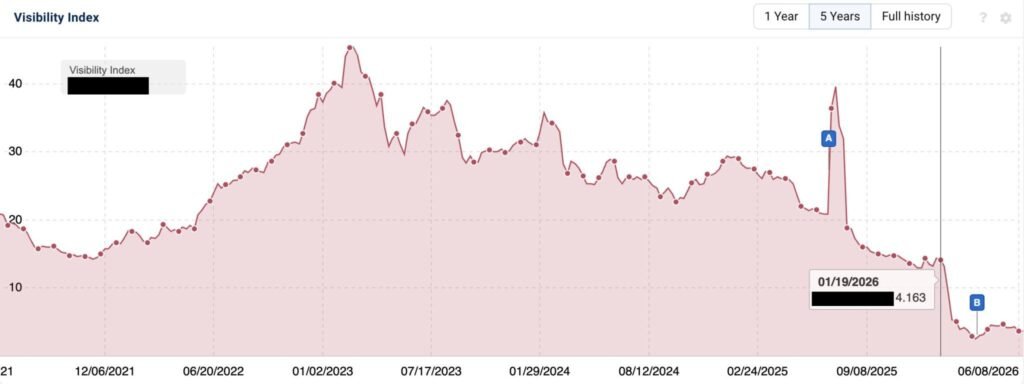
Tip #04: Make Your Site Technically Legible to AI Crawlers
None of the other tips matter if AI bots can’t actually reach your page.
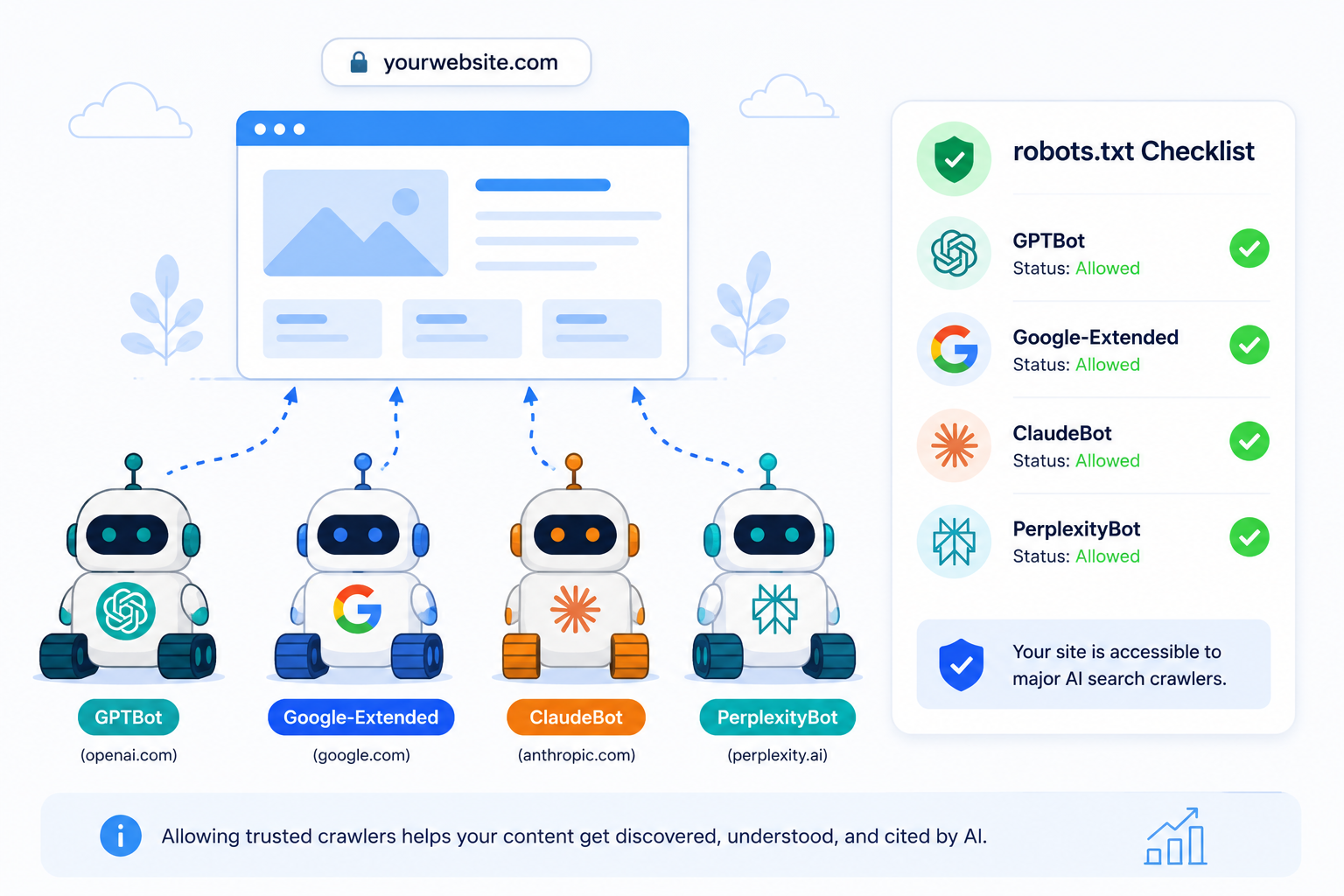
AI engines use their own crawlers, separate from Google’s.
- GPTBot and OAI-SearchBot for ChatGPT
- Google-Extended for Gemini and AI Overviews
- ClaudeBot for Claude
- PerplexityBot for Perplexity.
If your robots.txt blocks these, or if a hosting platform or Cloudflare’s AI-scraper protection has them blocked by default, your content is invisible to AI search, no matter how good it is.
Here’s how to check this yourself, step by step:
- Check your robots.txt: Go to yoursite.com/robots.txt and look for any Disallow rules targeting GPTBot, OAI-SearchBot, Google-Extended, ClaudeBot, or PerplexityBot. If any of them are blocked, remove that line.
- Check how your page actually renders. Use Google Search Console’s URL Inspection tool to view the rendered HTML, or right-click any page and choose “View Page Source.” If your key content doesn’t appear in that raw HTML and only shows up after JavaScript runs, that’s a problem for AI crawlers.
- Test with an AI crawler checker: You can enter your website’s URL on online AI crawling checkers to check what’s blocked and how to fix it.
- Check for paywalls or gated content: If your key pages sit behind a login or paywall, assume most AI engines are skipping them entirely.
- Don’t forget Bing: ChatGPT’s search runs largely on Bing’s index, so if your site isn’t indexed in Bing, it can be invisible in ChatGPT no matter how well it ranks on Google. Submit your sitemap to Bing Webmaster Tools and confirm OAI-SearchBot is allowed there too. Bing also feeds Microsoft Copilot, so this one step covers two AI surfaces at once.
Site speed also affects brand visibility in AI search engines. The fastest sites, with FCP (First Contentful Paint) under 0.4s, average 6.7 citations. The slowest ones (over 1.1s) drop to 2.1 citations.
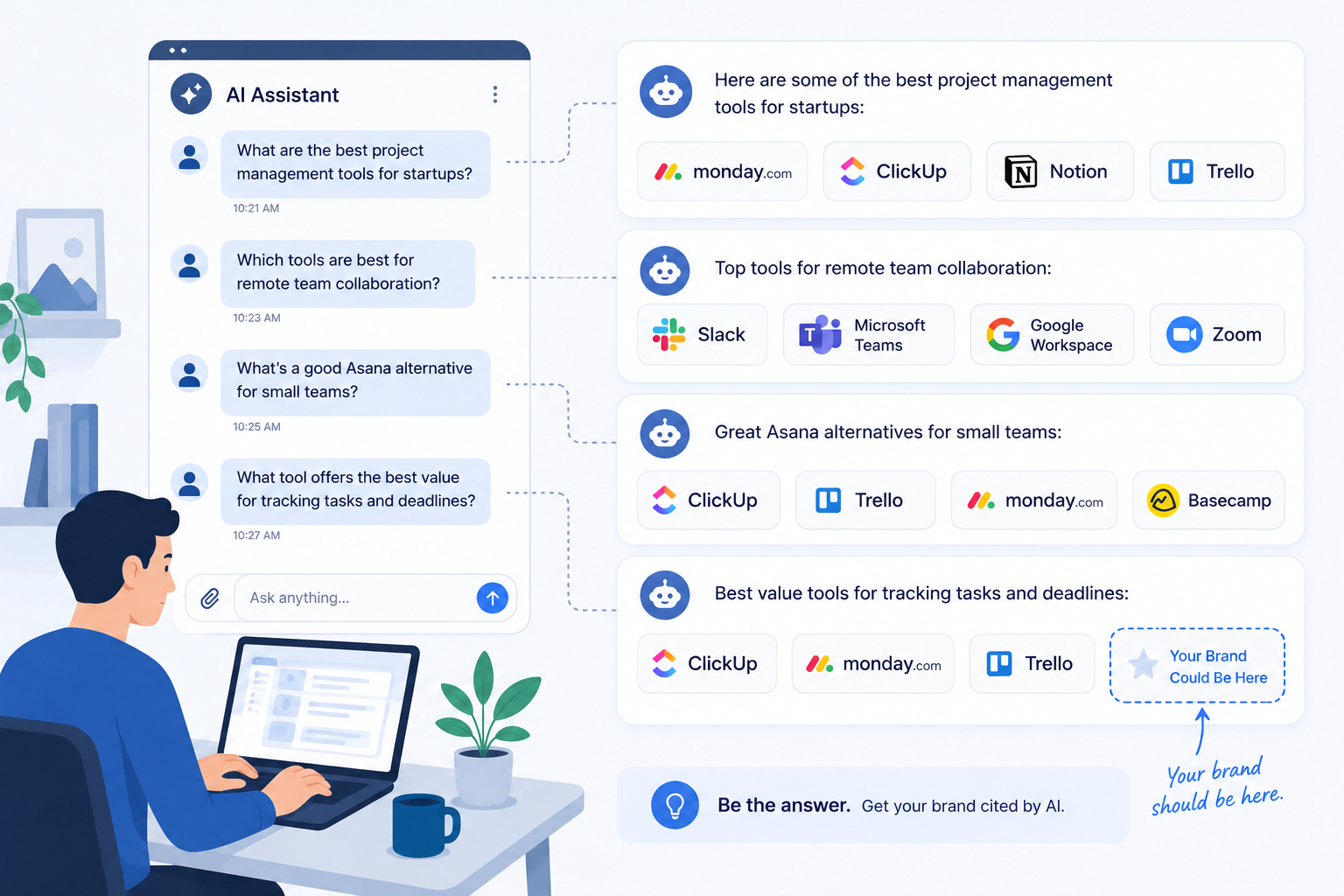
Tip #05: Start with the questions (prompt/query research)
Before you write or fix anything, find out what AI already says about your category.
Ask ChatGPT, Perplexity, and Gemini the 10 to 20 questions your buyers actually ask before purchasing. A few formats to start with:
- “Best [your category] for [specific use case]”
- “[Your category] vs [competitor]”
- “How to choose a [your category]”
- “Is [your brand] worth it”
- “Top [your category] for [industry or audience]”
Note who gets cited, who gets recommended, and whether you show up at all.
The prompts where your competitors appear and you don’t are your roadmap. They tell you exactly which questions to go own, instead of guessing at topics to cover. This also gives you a real baseline, so a month from now you can check the same prompts and actually see whether your other efforts moved the needle.
Add Tip #06:Make Your Brand Unmistakable as an Entity
The AI models understand the world through entities, named things like companies, people, and products that have consistent, verifiable identities across the web. The clearer and more consistent your entity signals are, the more confidently a model can name you in an answer.
Here are three things to fix:
- Lock down your brand description everywhere. Your business name, one-line description, and category language should be identical across your website, Google Business Profile, Bing Places, LinkedIn, Crunchbase, and every directory you’re listed on. Pick one version and make every platform match it.
- Add the right schema types. Without schema, your page is a blur of text to an AI. With it, your brand becomes a clearly defined entity. Priority types: Organization (defines who you are), Person or Author (credentials behind your content), Article or BlogPosting (for written content), and FAQPage (for real Q&A blocks). Only mark up what’s actually visible on the page.
- Use sameAs to connect your profiles. The sameAs property in your Organization schema lets you link your website to your LinkedIn, Crunchbase, and Wikipedia profiles, explicitly telling AI systems they all point to the same entity. It’s one of the most underused signals in this space.
How to Measure AI Search Visibility
You can’t improve what you don’t track, and these aren’t the metrics in your old SEO dashboard.
Citation and Mention Frequency
How often your brand is actually named across ChatGPT, Perplexity, Gemini, and AI Overviews for the prompts your buyers use. A citation means your URL got linked as a source. A mention means the AI named your brand in the answer text itself. They’re not the same thing, and most brands score low on both at first.
AthenaHQ’s State of AI Search 2026 report found the average brand mention rate across AI answers sits at just 17.2%, so even modest gains here put you ahead of most competitors.
AI Share of Voice
This means how often you show up against competitors for the same set of prompts, not just whether you show up at all. Most B2B brands appear in fewer than 30% of relevant queries, regardless of how strong their SEO is. This is a leading indicator, since it tends to move before AI-referred traffic does, much like share of voice has always led market share in traditional media.
Worth checking platform by platform too, since it’s common to hold 35% share of voice on one engine and single digits on another. Averaging across platforms hides exactly the gap you need to act on.
Entity Accuracy
When AI mentions you, does it get your category, positioning, and offering right? An AI confidently describing your company as something it isn’t is a visibility problem even when you technically “appear,” since it shapes what the reader takes away from that answer.
Sentiment matters here too. Being consistently mentioned as “the budget option” is technically visibility, but it’s also a slow brand bleed if nobody’s tracking how you’re framed.
AI Referral Traffic and Conversions
Segment AI sources in analytics, like utm_source=chatgpt.com, and watch whether they grow and convert. Worth knowing this undercounts reality. Google AI Overviews and AI Mode pass no attribution data at all, and ChatGPT only started appending its utm tag in mid-2025.
One estimate puts as much as 70% of AI-driven traffic landing in your “direct” bucket rather than where you’d expect it. So if your AI referral numbers look flat, check your direct traffic trend before concluding AI search isn’t sending you anyone.
Branded Search Lift and Assisted Pipeline
If your AI visibility is improving, you should eventually see more people searching for your brand name directly, plus AI-influenced touches appearing earlier in your sales pipeline.
Tools like Profound, Otterly, Conductor, Semrush, and Peec AI track all of this across engines.
What’s Next for Brand Visibility in AI Search
Nothing in this guide is a one-time checklist. Profound’s tracking found that 40 to 60% of cited sources change every month, with Google AI Overviews showing the highest drift at 59.3% and Perplexity the lowest at 40.5%. So a factor that correlates with citation today isn’t guaranteed to hold next quarter.
That means the brands that stay visible aren’t the ones that fixed everything once. They’re the ones who keep checking, keep earning new mentions, and keep adjusting as these systems change.
Curious how your brand appears across ChatGPT, Perplexity, and AI Overviews today? Request a GEO visibility audit to see where you’re being cited, where you’re being missed, and what it would take to become the answer in your category.
FAQs
How long does it take to see results from AI search optimization?
Most brands start seeing early citations within 60 to 90 days, especially if they’re already doing some of the structural and authority work. Full visibility, where you show up consistently across multiple AI engines, usually takes 4 to 6 months of steady effort.
Does paid advertising help with AI search visibility?
Not directly. AI engines weight earned and organic signals far more heavily than paid placements. Ad spend can drive brand awareness that leads to organic mentions, but it doesn’t get cited the way earned media or reviews do.
Is GEO replacing SEO entirely?
No. Traditional SEO still drives the majority of search traffic today, and ranking well still matters for visibility on Google itself. GEO is an added layer on top of SEO, not a replacement for it.
Does having a Wikipedia page help with AI citations?
It can help, since Wikipedia is one of the most heavily cited sources across AI engines. But it only helps if your brand genuinely meets Wikipedia’s notability guidelines. A rejected or low-quality page does more harm than good.
Do AI search engines treat video content differently from text?
Yes. YouTube content gets cited frequently, especially for how-to and explainer queries, since AI engines often treat video transcripts as a distinct, trusted source type separate from written articles.
Can I check if my competitors are getting cited and I’m not?
You can manually test this by asking ChatGPT or Perplexity the kinds of questions your customers would ask and seeing who comes up. Tools like Profound, Otterly, and Conductor are built specifically for tracking AI visibility.
Sources
- https://www.airops.com/blog/signals-ai-models-cite-webpage
- https://moz.com/blog/ai-mode-citations
- https://www.superlines.io/articles/ai-search-statistics/
- https://www.conductor.com/academy/aeo-geo-benchmarks-report/
- https://searchengineland.com/new-ai-search-data-visibility-trust-480089
- https://sparktoro.com/blog/in-2026-less-than-one-third-of-google-searches-still-send-a-click/
- https://seranking.com/blog/how-to-optimize-for-chatgpt/
- https://citerahq.com/research/b2b-saas-content-study
- https://www.linkedin.com/posts/lily-ray-44755615_these-are-3-well-known-brands-that-are-also-activity-7469712876962807808-F8eV?utm_source=share&utm_medium=member_desktop&rcm=ACoAACChol4BMzdiE-3Xr1atmnhkO1M0Y58crUI
- https://thedigitalbloom.com/learn/2025-ai-citation-llm-visibility-report/
- https://www.reddit.com/r/DigitalMarketing/comments/1u72nqr/is_reddit_marketing_actually_a_thing_or_just_hype/
- https://cryptobriefing.com/reddit-llm-referral-traffic-record-may-2026/
- https://muckrack.com/blog/2025/08/13/what-is-ai-reading
- https://searchengineland.com/brand-authority-ai-search-476324