Skip to content
 Most businesses haven’t noticed yet: the page where buyers start their research has moved to Google AI Overviews. AI Overviews now appear in roughly 48% of all tracked Google searches, up from 31% just a year ago, and organic click-through rates drop by as much as 61% when one appears. If your traffic has been sliding even though your rankings look fine, that’s the reason.
That page is the AI Overview, Google’s AI-generated summary that now sits at the top of a growing share of searches, answering the question before the user ever scrolls to a result. AI Overviews reach over 2.5 billion people a month, and Google’s conversational AI Mode has grown to 1 billion monthly users within a year of launch, with AI Mode query volume reportedly more than doubling each quarter. For a growing share of searches, the AI summary is the answer the buyer reads. The ten blue links underneath it are increasingly an afterthought. Getting found in this new layer is what’s now called AI Overviews SEO, and most businesses haven’t started.
This article explains what AI Overviews are, how AI Overviews work, and why ranking and citation have quietly become two different jobs. It also covers the paid angle almost every SEO team misses: the content that helps a business get cited in AI Overviews can earn a paid placement right next to it, and most teams are still treating those as separate programs.
Key Takeaways
- Google AI Overviews now reach over 2.5 billion people a month, and the majority of Google searches now end without a click to any website, about 68% in the US in early 2026, meaning roughly 7 in 10 searches never send a visitor to any site.
- Ranking and citation have split apart: page one position helps Google trust a page, but top ten citation overlap fell sharply between mid-2025 and early 2026, and organic CTR drops up to 61% when an AI Overview is present.
- Generative Engine Optimization (GEO) means structuring content so AI systems extract and cite it, alongside (not instead of) traditional SEO. Answer Engine Optimization (AEO) is a narrower, voice-and-snippet-era subset of GEO.
- Google now serves ads alongside and inside AI Overviews, matched on both the query and the Overview’s own content, so one piece of content powers both your citation and your ad placement.
- The winning position is being cited organically and appearing in the ad on the same answer. Treat content and paid search as one integrated motion.
What Are Google AI Overviews and How Do AI Overviews Work?
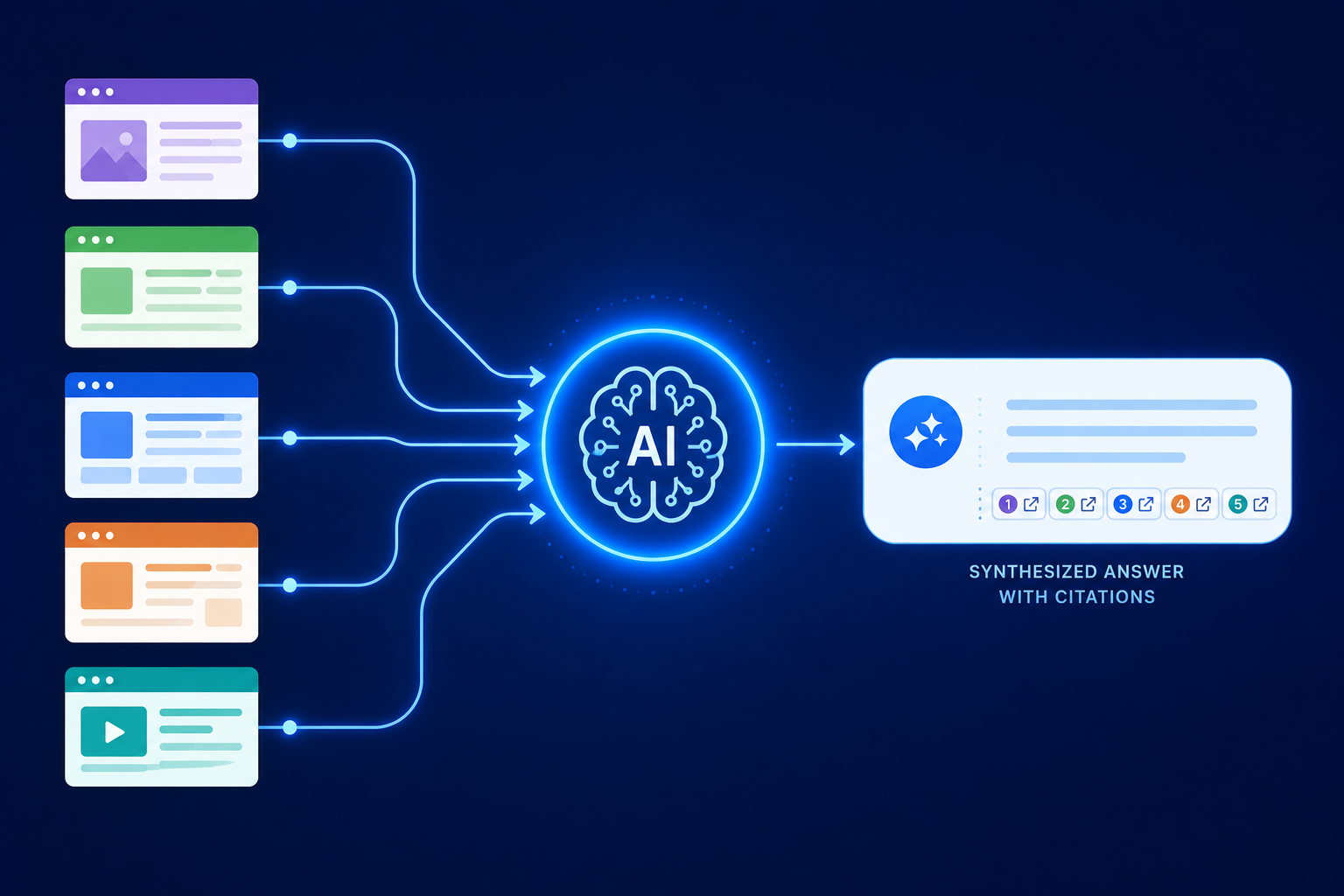
Google AI Overviews are AI-generated summaries that appear above traditional search results, synthesizing information from multiple web pages into a single answer with linked citations. A customized version of Google’s Gemini model powers them, but what matters is where that model sits: inside Google’s core web ranking system, not off to the side like a standalone chatbot.
This integration is the whole point. An AI Overview doesn’t invent an answer from training data. It identifies relevant, high-quality pages already in Google’s index and synthesizes them into a passage-level answer. The same fundamentals that make a page eligible to rank still make it eligible to be cited. The shift is in what happens after eligibility, and that’s where this article focuses.
GEO vs. AEO: GEO is the umbrella discipline; AEO is one piece of it. AEO (Answer Engine Optimization) began as optimizing content for voice assistants and featured snippets. GEO (Generative Engine Optimization) covers every generative surface such as Google AI Overviews, ChatGPT, Perplexity, Gemini, Claude, and Copilot and subsumes AEO.
We use GEO as the primary term throughout, because the structural work that earns a featured snippet is largely the same work that earns an AI citation across all of these engines.
When Do AI Overviews Show Up? AI Overviews vs. Traditional SEO
AI Overviews tend to trigger on complex, “no single right answer” queries — the kind where a buyer benefits from pulling information across several sources. Think comparisons, “how do I decide between,” “what’s the best approach for,” and research-stage questions.
Straightforward factual lookups (“store hours,” “what year did X launch”) are less likely to generate a full Overview. The takeaway for marketers: the queries your prospects use while they’re still deciding — the highest-value, top-of-funnel research questions — are exactly the ones most likely to be answered by AI before anyone reaches your site.
Data from BrightEdge, Semrush, and Seer Interactive reveals a clear intent hierarchy — not all queries trigger an AI Overview, and the difference between high-probability and low-probability triggers is significant.
High-probability triggers (60–95% appearance rate):
- Comparison queries (“X vs Y”) trigger AI Overviews 95.4% of the time. Google’s AI is built for synthesis, and nothing signals “synthesize this” more directly than a head-to-head.
- Review queries land at 86.3%, the AI aggregates opinions from across the web so the user doesn’t have to.
- Question formats (“What is…” / “How does…”) come in at 85.9%.
- “Near me” informational queries, such as “what to look for in a dentist near me” — trigger AIOs 76.9% of the time.
Low-probability triggers (under 20% appearance rate):
- Pure transactional queries (“buy Nike shoes online”) rarely generate an Overview. Google serves Shopping Ads and store links instead.
- Navigational queries (“Netflix login”) generate none — the intent is to go somewhere, not learn something.
- Single-sentence factual answers go to Featured Snippets or the Knowledge Graph, not an AIO.
- Broad, single-word searches only trigger an AIO 27.3% of the time.
Example Search: No AI Overviews – search term is “best medspas in miami”
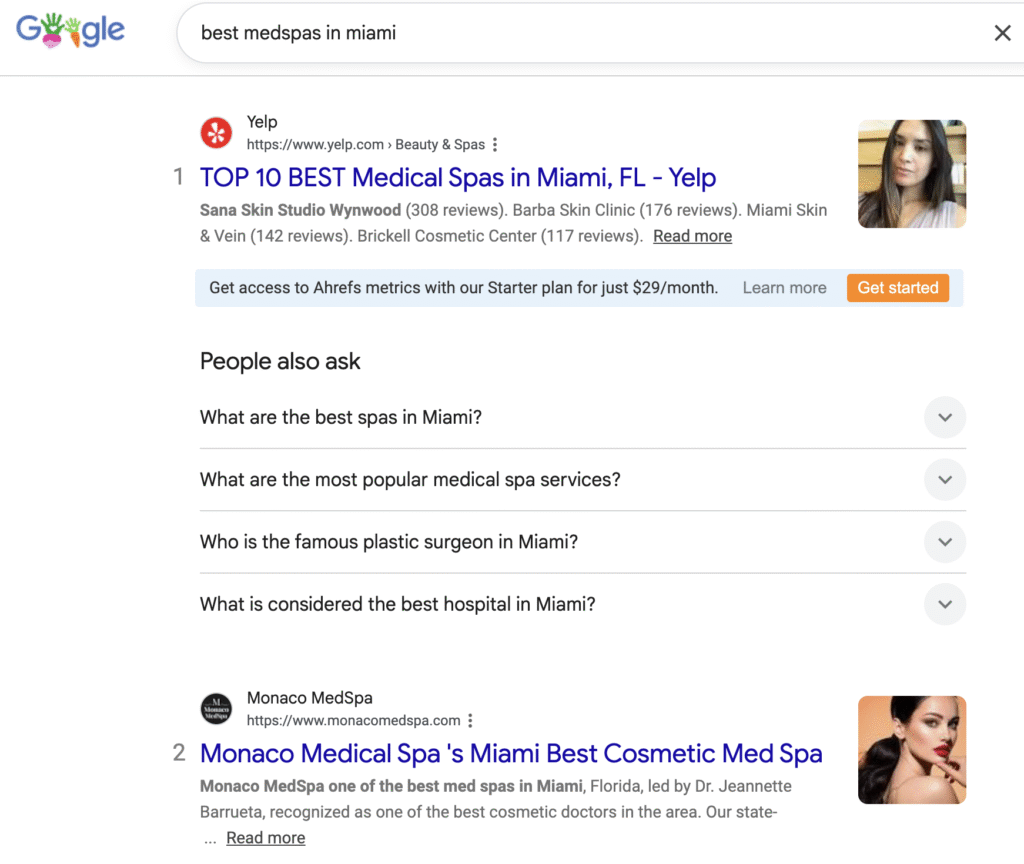
A transactional or navigational version of a query returns standard results — no AI Overview.
Example Search: AI Overviews – search term is “best medspas in miami”
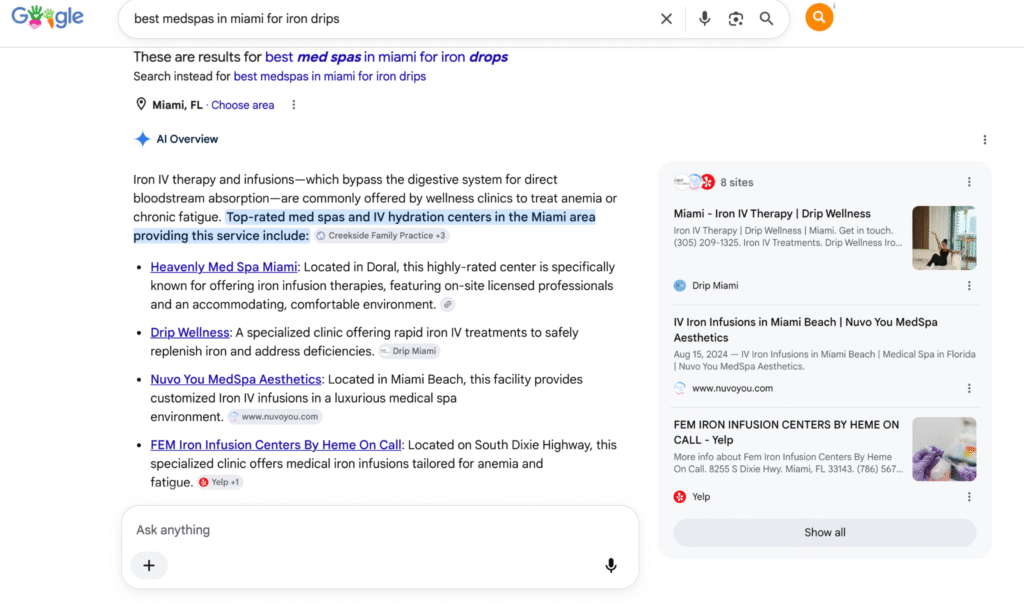
The same topic phrased as a research or comparison query triggers a full AI Overview at the top of the SERP.
Google also treats industries differently based on user safety, knowledge requirements, and ad-revenue protection:
| Industry Vertical | AIO Coverage Rate | Why? |
| Education | ~85% | Highly conceptual, definition-heavy, and informational. |
| Healthcare | ~83% | Google relies on deeply authoritative medical sources to synthesize symptoms and conditions. |
| B2B Tech & Insurance | ~60–70% | Technical documentation and complex policy comparisons naturally fit generative summaries. |
| Entertainment & Travel | ~35–45% | Growing rapidly as Google integrates itinerary building and review aggregation. |
| Ecommerce & Finance | <20% | The lowest coverage. Google limits AIOs here to protect ad revenue and avoid liability on YMYL financial advice. |
Three additional data points shape how to think about AI Overviews vs. traditional SEO:
- The citation gap: roughly 5 out of 6 citations in an AI Overview come from pages outside the top 10 organic results — pulled from positions 11 to 100. The system rewards content that answers a question clearly, not content that simply ranks highest. This is covered in detail in the next section.
- The ad footprint: Google’s ad presence inside AI Overviews grew from just 3% of monitored search pages at launch to roughly 40% — meaning the same answer block now frequently contains both a cited result and a paid placement. The full strategic implication is covered in the paid and organic section below.
- SERP shrinkage: when an AI Overview appears, it averages over 1,200 pixels tall. Every organic link below it is pushed off screen on both desktop and mobile — which is the mechanical reason CTR drops so sharply when an AIO is present.
Why AI Overviews SEO Is Different From Traditional SEO
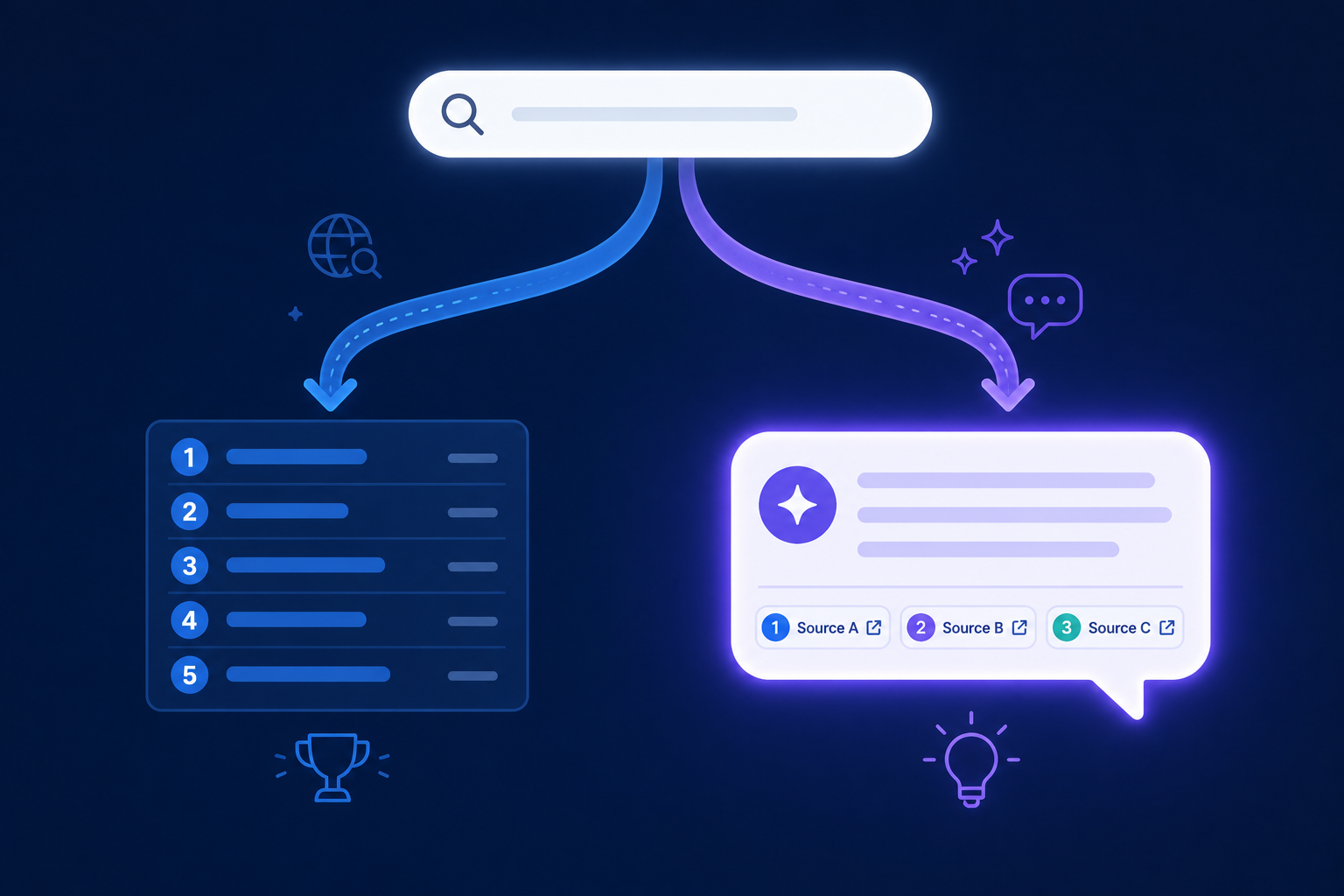
For two decades, SEO had one job: earn the click. Rank on page one, win the visit, convert on your site. AI Overviews retire that model in three ways.
The click is no longer guaranteed. US zero-click searches reached roughly 68% in early 2026, up from about 60% in 2024, according to SparkToro and Similarweb data. That means roughly 7 in 10 searches end without a single visit to any website. When an AI Overview is present, organic CTR falls by as much as 61%, dropping from 1.76% to 0.61% per Seer Interactive’s study of 5.47 million queries. Buyers get the answer, form an impression of who’s credible, and move on. Your content can shape a purchase decision without ever registering as a session in your analytics.
Ranking and citation have come apart. Being in the top ten still helps Google find and trust a page, but it no longer decides which passages get pulled into the answer. As recently as mid-2025, top ten ranked pages supplied roughly 76% of AI Overview citations. By early 2026, that share had fallen to roughly 38% per Ahrefs’ analysis of 863,000 keywords and over 4 million AI Overview URLs. A separate BrightEdge analysis put the overlap even lower, at roughly 17%. Both figures point the same direction: pages outside the top ten are now winning citations, and the deciding factor is passage clarity, not ranking position.
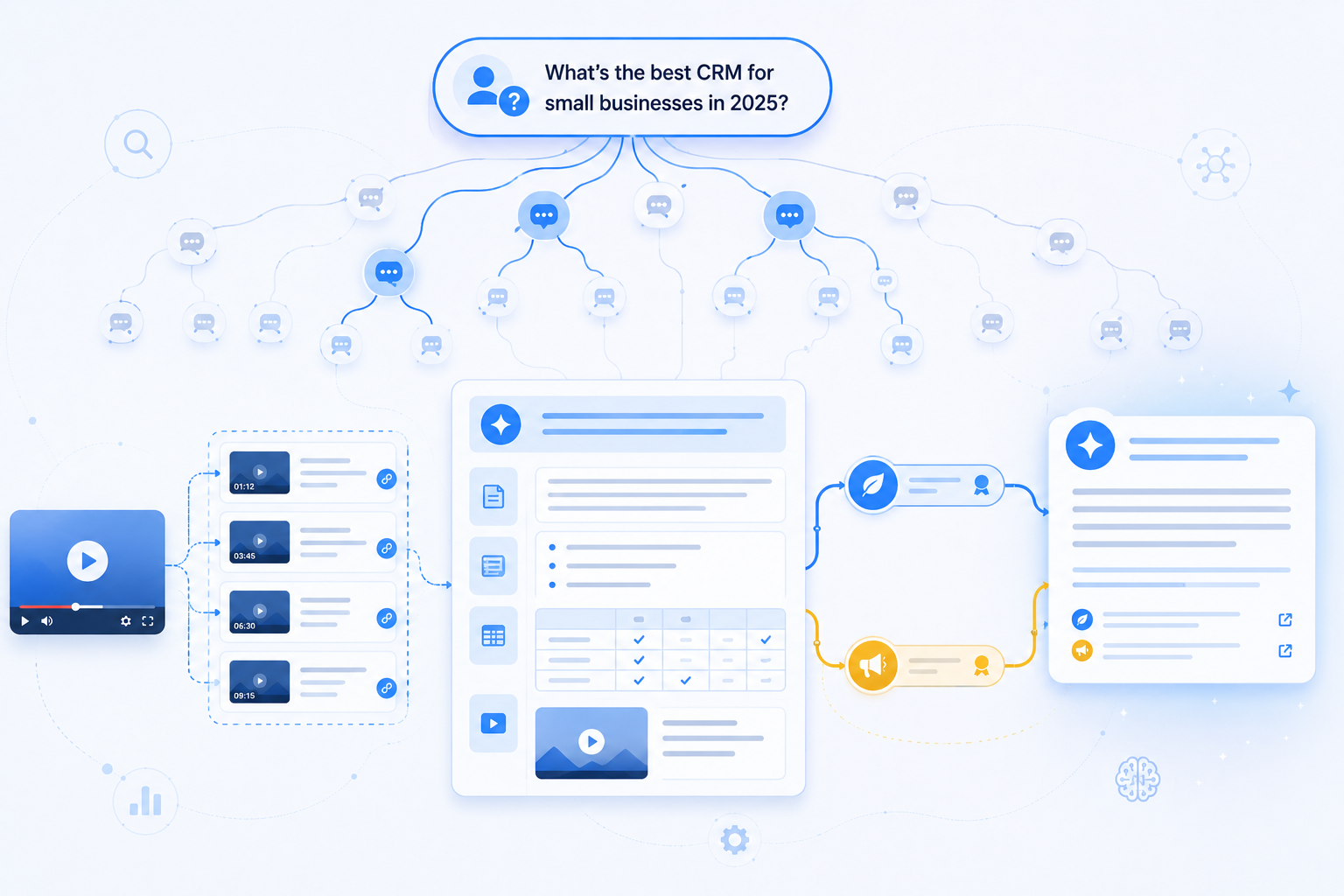
The mechanism behind this shift is query fan-out: Google’s AI breaks one question into a cluster of related sub-queries and builds its answer from whichever pages cover that whole cluster most consistently, not just the page ranking for the exact term the user typed. A page sitting at position seven can out-cite the page at position one if its content answers the surrounding questions more completely. Passage structure and information consistency are now meaningful inputs you can control.
The metric changed. Google’s Search Central documentation has long emphasized task completion over raw click counts, and that’s now the dominant reality, not a side note. (More on why your traffic may be dropping even with stable rankings, below.)
This is where Generative Engine Optimization, or GEO, comes in, the discipline some call AI Overviews SEO. GEO means structuring content and authority so AI systems choose to cite it inside their answers. It sits alongside traditional SEO, not instead of it. A page still needs to be indexed, trusted, and technically sound. What changes is the target: from “rank the page” to “own the passage.”
The Part Almost Everyone Is Missing: Paid and Organic Now Share One Input
GEO gets your content into the answer. But there’s a second layer almost no one connects to it, and it’s the one that should change how you think about your whole funnel.
Google is now placing ads alongside and inside AI Overviews, and that ad inventory is expanding fast. By one analysis (Digital Applied), ads appear in roughly 25% of AI-generated results and have grown several-fold year over year. AI Overviews are turning into an advertising surface.
What makes these placements different from classic search ads is how the matching works. According to Google’s own Ads Help documentation, the system weighs both the search query and the content of the AI Overview itself when deciding which ad to serve. The organic answer and the paid placement now draw on the same contextual signal.
That has a strategic consequence most teams haven’t connected yet: the authoritative, well-structured content that earns an organic citation is the same asset that improves the odds of a strong paid placement beside it. Run them as separate programs, managed by separate teams with separate briefs, and the compounding effect gets left on the table. The businesses that win this next phase treat content and paid search as one motion feeding a single AI layer, not two departments working in isolation.
An organic citation reads to buyers as editorial validation. A paid slot reads as advertising. Appearing in both, on the same answer, is the most persuasive position available: Google appears to be recommending the business twice. That’s the placement to engineer toward.
Not sure where your business stands in AI search right now? See how demandnow.ai audits and builds citation strategies for businesses like yours.
How to Get Your Business Cited in AI Overviews: How to Optimize Content for AI Search
A business can’t directly target or buy an organic AI citation, and it can’t opt ads out of AI surfaces either. What works is making content the cleanest, most trustworthy source for the questions buyers ask. Here’s what it takes to optimize content for AI search, whether the engine is Google AI Overviews or something else.
- Answer the question first, then expand. Lead each section with a direct, liftable answer in two or three sentences. Real-time retrieval engines, including Google AI Overviews, Perplexity, and ChatGPT’s search mode, evaluate a page’s opening content first when deciding what to extract. A page that builds up to its answer in paragraph four loses the citation to a page that states it in sentence two, even if the buildup page ranks higher overall.
- Structure for extraction. Use question-phrased headings, short paragraphs, and lists. Break content into self-contained blocks, each one written so it makes sense if an AI system lifts it on its own with no surrounding context. Each block should open with a direct answer, follow with supporting evidence or context, and close with a practical implication. This inverted-pyramid pattern within each section is what makes a passage extractable without the surrounding article.
- Add something only your business can say. Original data, real client outcomes, and named expertise get cited. Generic, restated content competes against dozens of pages saying the same thing and rarely wins. We’ve seen this play out repeatedly: pages with the same rankings and same backlink profiles get cited inconsistently, and the deciding factor is almost always whether the page states something concrete a competitor’s page doesn’t. For example: restructuring a client’s SaaS comparison pages from narrative style to direct answer-first blocks moved them from ranking at position four to regular citation in AI Overviews for their target cluster, without any change to their underlying rankings.
- Cover the follow-up questions. Buyers, and the AI systems modeling their queries, drill into pricing, comparisons, implementation, and edge cases. A page that answers the sub-questions a competitor skips becomes the source pulled into the fan-out. Map the full cluster of questions a buyer asks before making a decision, not just the primary keyword, and build content that addresses each sub-question with the same direct-answer structure.
- Back claims with visible, credible signals. Cite reputable sources, show genuine expertise, support structured data with content users can actually see, and keep pages current. AI systems weight recency and verifiability: a claim backed by a named study with a date and a figure consistently outperforms the same claim stated without attribution. Named authors, publication dates, and inline source links all strengthen the trust signals that make a passage citable.
- Invest in multimodal assets. Support strong text with high-quality images and video. Google’s latest guidance favors it, and visual assets widen where your business can appear in an AI-generated answer. YouTube is the most-cited domain in Google AI Overviews, accounting for nearly 30% of all citations per BrightEdge data. Videos that follow a clear structure problem, steps, conclusion with accurate transcripts, timestamped chapters, and keyword-matched descriptions give AI systems extractable segments to cite, effectively multiplying citation surface area from a single asset. Instructional and demonstration-format videos earn the most citations; structure matters more than subscriber count.
- On the paid side, go keywordless. The conversational, long-tail queries that trigger AI Overviews slip past exact-match keywords. Broad match, AI Max for Search, Performance Max, and Shopping campaigns reach those queries, paired with strong creative and the same authoritative landing pages your content team built.
A note Google made official in mid-2026: site owners now get clearer reporting on how content performs in AI Search, plus a control over whether content appears in generative AI features at all. Before touching that opt-out, understand the trade. For most businesses, visibility inside the answer is the entire game right now.
Your Zero-Click Search Strategy: What to Do This Quarter
None of this requires a full rebuild. It requires not optimizing for a buyer journey that no longer exists. This is the zero-click search strategy that matters now. Start here:
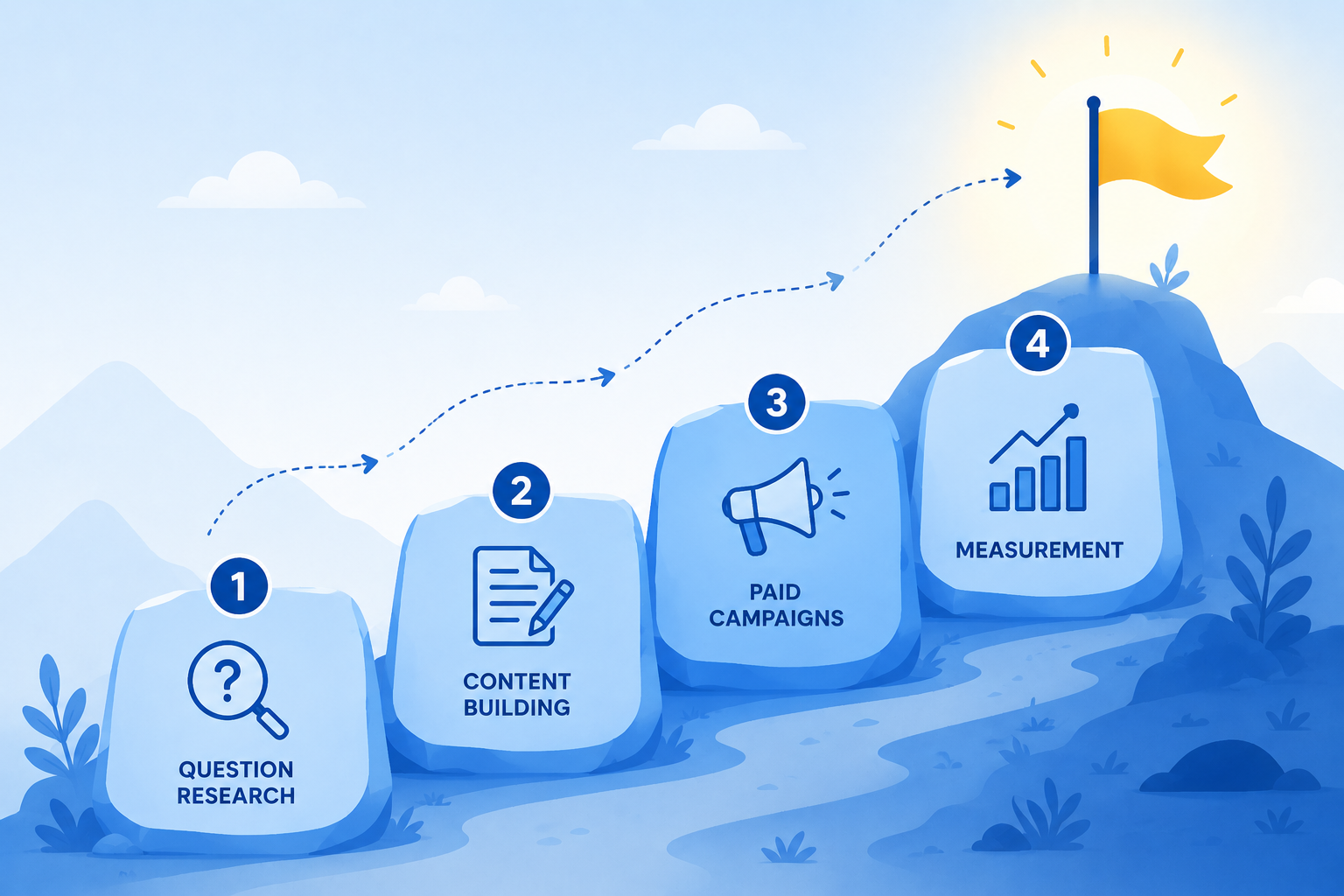
- Identify the 5 to 10 research-stage questions your best customers ask before they buy, and map how those questions relate to each other.
- Build genuinely authoritative pages that answer each one directly, structured for extraction.
- Pair the cluster with keywordless paid campaigns so your business appears in both the citation and the ad on the same answer.
- Change how success gets measured. Track citations, branded search lift, and qualified pipeline, not just clicks.
The businesses that adapt early become the default sources their categories get built on. The ones that wait quietly go invisible to buyers who never see a reason to click past the answer. Want help building that strategy? Talk to the demandnow.ai team.
FAQs
Do AI Overviews mean SEO is dead?
No. A page still needs to be indexed, trusted, and technically sound to be eligible for citation. What changed is the goal: from earning the click to owning the passage that gets cited.
Can a business pay to appear in an AI Overview?
Not for the organic citation. Ads can appear alongside or within AI Overviews, but Google determines organic citations based on relevance and authority, and that placement can’t be directly targeted or bought.
How is GEO different from SEO?
Traditional SEO optimizes a page to rank. Generative Engine Optimization (GEO) structures content and authority so AI systems choose to cite it inside their answers. They work together: ranking still determines indexability and initial trust, GEO determines which passages get extracted.
Why is traffic dropping if rankings are stable?
Because more searches now end with the AI answer instead of a click. A ranking can hold steady while the click-through rate behind it erodes, since the AI Overview already satisfied the user before they reached the results list.
How do you rank in Google AI Overviews?
Ranking in Google AI Overviews starts with traditional SEO: indexing, relevance, and E-E-A-T still determine eligibility. From there, citation depends on answering the target question early in the content, structuring it in self-contained blocks, covering the full cluster of related sub-questions, and backing claims with named expertise and current, verifiable data.
Want to see how we get businesses cited in AI search? See how we get businesses cited in AI search →
Sources
- Google Ads Help, “About ads and AI Overviews”: support.google.com/google-ads/answer/16297775
- Digital Information World, “Google Says AI Overviews Has Over 2.5 Billion Monthly Active Users as New Website Controls Roll Out”: digitalinformationworld.com/2026/06/google-says-ai-overviews-has-over-25.html
- Digital Applied, “Google AI Mode: 75M Users, Ads in 25% of AI Results”: digitalapplied.com/blog/google-ai-mode-75m-users-ads-in-ai-results-2026
- Discovered Labs, “Google AI Mode and the May 2026 Search Update”: discoveredlabs.com/blog/google-ai-mode-may-2026-search-update
- Search Engine Land, “How to Get Your Google Ads Seen in AI Overviews”: searchengineland.com/get-google-ads-ai-overviews-478737
- BrightEdge, “AI Overviews at the One-Year Mark: Presence, Size, and What They’re Citing”: brightedge.com/resources/weekly-ai-search-insights/ai-overviews-one-year-presence-size-citing